

















Table of Contents
- Key Points
- Understanding AI's Role in Qualitative Research
- Limitations and Considerations for Research Integrity
- Practical Tips and Best Practices: Applying Language Models to Qualitative Analysis
- AI Language Models in Qualitative Analysis: Weighing the Pros and Cons
- Frequently Asked Questions (FAQ)
- Related Questions


Understanding AI's Role in Qualitative Research
The Current State: A Fragmented Landscape
The rise of artificial intelligence (AI) has brought about a significant shift in how qualitative research is conducted. Numerous startups are emerging, each offering unique AI-driven solutions for qualitative analysis.

While this abundance of innovation presents exciting possibilities, it also creates a fragmented landscape. Researchers face the daunting task of sifting through a myriad of options, many of which are complex and convoluted. The promise of AI to streamline and enhance qualitative research is undeniable, but the sheer number of tools and approaches can lead to confusion and uncertainty.
To cut through this complexity, modern qualitative research software is increasingly highlighted in AI tool directories as offering integrated solutions that blend language‑model analysis with practical features for coding, synthesis, and data management, helping researchers move from experimentation to actionable insights.
Add-ons and integrations are also prevalent, with existing qualitative analysis software platforms incorporating AI features. Claims that large language models (LLMs) can independently conduct entire analyses further complicate the picture. The lack of a clear, unified approach makes it challenging for researchers to determine which AI tools are genuinely valuable and how best to integrate them into their workflows. This is a market saturated with hype and complexity, so breaking down these AI concepts is essential for better navigation.
Therefore, qualitative researchers need to understand exactly what AI language models can do for them, as well as the capabilities they lack. As researchers gain deeper knowledge, it also becomes increasingly crucial to check security measures and adhere to industry best practices.
Breaking Down Language Models: The Core of AI Qualitative Analysis
To navigate the complexities of AI in qualitative research, it's crucial to understand the fundamental building blocks of these technologies. Large language models are a critical aspect of current, state-of-the-art analysis processes, and operate within the broader contexts of artificial intelligence, machine learning, and deep learning.

Let's briefly define each:
- Artificial Intelligence (AI): AI refers to systems that can replicate cognitive tasks, essentially mimicking human intelligence. This is an umbrella term that encompasses various techniques aimed at creating intelligent machines.
- Machine Learning (ML): ML is a method of teaching machines to perform tasks without explicit programming. Instead of hard-coded rules, machines learn patterns from largedatasets and improve their performance over time.
- Deep Learning: This is a subset of machine learning that utilizes artificial neural networks with multiple layers (hence "deep") to analyze data. These networks learn complex relationships and representations from vast amounts of information. The layered aspects of neural networks are essential for language processing and qualitative research.
AI, therefore, is the broad goal, machine learning is the method by which machines achieve certain cognitive functions, and deep learning is the means by which that method is greatly enhanced to the level we see today. Language models are pre-trained on massive datasets of text from the internet. This pre-training allows them to understand language patterns, grammar, and relationships between words. Language models are commonly trained using machine learning methods, as well as deep learning neural networks, enabling AI to gain a firmer grasp of complex, unstructured data.
From Pre-Training to Fine-Tuning: How Language Models Learn
Large Language Models (LLMs) gain their understanding of language through a two-step process:
- Pre-Training: LLMs are initially trained on vast amounts of text data scraped from the internet. This massive dataset exposes them to a wide range of language styles, topics, and contexts, allowing them to learn the fundamental rules and patterns of language.
- Fine-Tuning: After pre-training, LLMs undergo fine-tuning on more specific datasets tailored to particular tasks. This step customizes the model's behavior and improves its performance for specialized applications, such as qualitative analysis. The model then understands the relationship between language fragments known as tokens, but are still not particularly good for any one task.
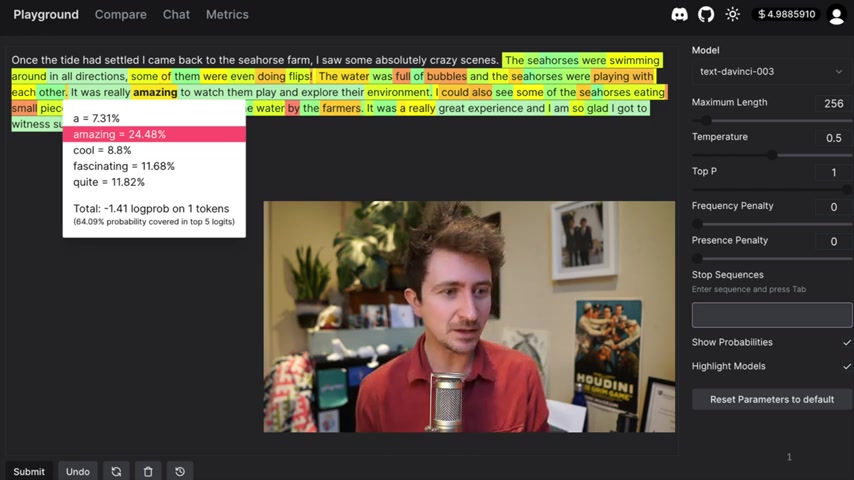
During the fine-tuning process, language models learn the relationships between words and phrases. They identify patterns and make predictions about which words are likely to follow each other. Think of this step as a computer learning a new language. By showing the computer different patterns and phrases, it better understands the basic rules and patterns in a set of data.
Limitations and Considerations for Research Integrity
Addressing the Ethical Implications of AI use
There are some important concepts researchers should keep in mind when using large language models for qualitative research. Ethical issues like security and privacy are essential, especially when working with confidential data from research participants. Researchers must take steps to protect privacy, as these tools are often trained on language patterns found on the internet.

The same LLMs, however, can be used to protect participant privacy, such as redacting sensitive data. Some more pressing ethical concerns:
- Data security, encryption, and handling
- Participant identities and private insights
- Transparency in coding
- Objective use of LLMs
Language models are primarily trained on large swaths of the internet, which itself includes a lot of argumentative rhetoric. It's important to keep this training in mind, as LLMs may produce argumentative and contentious results as a result. All of this must be tempered with the knowledge that LLMs are largely predictive text tools that are helpful, but not infallible. As such, ethical qualitative research should utilize LLMs as an assistant for processes such as manual data coding, synthesis of information, and other functions that can help qualitative researchers.
Practical Tips and Best Practices: Applying Language Models to Qualitative Analysis
System Prompts
System prompts are instructions that guide the language model's behavior. By carefully crafting system prompts, researchers can influence the model's output and tailor it to specific research goals. Think of system prompts like setting the parameters for an AI tool. The better you tailor the system prompts, the better you can generate and synthesize insights for qualitative analysis. Also keep in mind:
- Clearly define the desired output format.
- Provide context about the research question and data.
- Specify any constraints or biases to avoid.
- Iterate and refine the prompt based on the model's responses.
Tokenization
Tokenization is the process of breaking down text into smaller units called tokens, which are typically words or sub-word units. Language models process text at the token level, so understanding how tokenization works is crucial for interpreting model behavior.
- Be aware that tokenization can affect how the model interprets and processes text.
- Consider the implications of different tokenization schemes for your research.






Most people like

































Report
Please select a reason for reporting
- 13 Reasons to Switch from Snapchat to Text Messaging
- 7 Powerful Speech to Text Apps to Boost Productivity
- 10 Best Speech to Text Tools for Effortless Transcription
- 13 Free Tools to Easily Transcribe Audio to Text
- 15 Surprising Ways Google's Speech-to-Text Boosts Productivity
- 7 Best Free Online Audio to Text Transcription Tools
- 9 Tips to Transcribe Speech to Text Faster and Better
- 13 Best Speech to Text Software for Windows 10 in 2023
- 7 Tips for Choosing the Best Transcriber for Audio to Text
- 11 Reasons Why Dragon Speech-to-Text Apps are Game-Changers
- 6 Secrets to Enhance Your Speech to Text Transcription
- 6 Brilliant Ways to Boost Productivity with Talk-to-Text on Your MacBook
- 6 Ways Transcription Software Converts Audio to Text
- 8 Tips to Transcribe Speech to Text Like a Pro
- 6 Reasons IBM Watson Speech to Text is a Game-Changer
- 14 Powerful Ways Talk-to-Text Improves Your Workflow
- 12 Top Windows Speech-to-Text Software for Efficient Transcription
- 12 Game-Changing Benefits of Apple's Speech to Text Technology
- 9 Powerful Use Cases for AWS Speech to Text Technology
- 10 Easy Steps to Transcribe YouTube Videos to Text
- transcription audio en texte
- online audio transcription
- free audio file transcription
- free ai audio transcription
- audio transcription service
- audio transcription online free
- audio transcription free online
- audio to transcription software
- audio and transcript
- ai audio transcription free
- voice recording to text converter
- translate voice recording to text
- record voice to text
- audio recording to text converter
- voice recording and transcription
- chatgpt voice to text
- gmail voice to text
- speech to text reader
- speech to text ai free
- speech to talk
- Create Engaging Animated Explainer Videos with a Free AI Tool
- Stop Multi-Subscribing: Benchmark Top AI Visual Models in One Canvas
- Best Seedance 2.5 API Provider: Every Price on the Market, Checked at Source
- AI OnlyFans: How to Generate $30,000/Month (Legally)
- Transform Your Script into an Engaging Video with AI Video Maker!
- AI Marketing Automation: A Comprehensive Guide for Small Businesses
- Midjourney Alternative for Anime Art Creators: Why PixAI May Be Better for Character Workflows
- 10 Things Most People Get Wrong About AI Image Search
- AI Girlfriend Apps: Top Choices Redefining Relationships 2025
- How to Reduce Quoting Errors in Salesforce with AI-Assisted Quote Creation
- AI Resume Builders: EnhanceCV, ResumeNerd AI, & Teal Compared
- ResumeAI: Crafting ATS-Optimized Resumes with AI
- AI in Resume Writing: A New Era for Job Seekers
- AI Resume Tools: Streamline Your Job Search and Land Your Dream Role
- AI Resume Optimization: The Right Way to Land Interviews
- Crafting a Killer Resume with AI: A Step-by-Step Guide
- Crafting a Winning Resume: AI Tools and Expert Tips
- AI Job Search: Level Up Your Career with AI Automation
- Empower Your Career Journey: Dynamic Resumes with AI
- AI Resume Builder: Create Professional Resumes Effortlessly

Copyright ©2026 toolify