

















Table of Contents
- Key Points
- Understanding Cloudflare's AI Agents SDK
- Diving Deeper: Key Features of the AI Agents SDK
- Getting Started: How to Use Cloudflare's AI Agents SDK
- Cloudflare AI Agents SDK Pricing: Understanding Your Options
- Evaluating Cloudflare AI Agents SDK: A Look at the Pros and Cons
- Key Functionalities and Core Features of Cloudflare AI Agents SDK
- Unlock the Potential: Innovative Use Cases for Cloudflare AI Agents SDK
- Frequently Asked Questions about Cloudflare AI Agents SDK
- Related Questions


Understanding Cloudflare's AI Agents SDK
What is Cloudflare AI Agents SDK?
The Cloudflare AI Agents SDK is a powerful toolkit designed to streamline the creation, deployment, and management of AI agents. It's built upon the concept of Durable objects, which are stateful serverless functions that can persist data and execute tasks over extended periods, even when inactive.
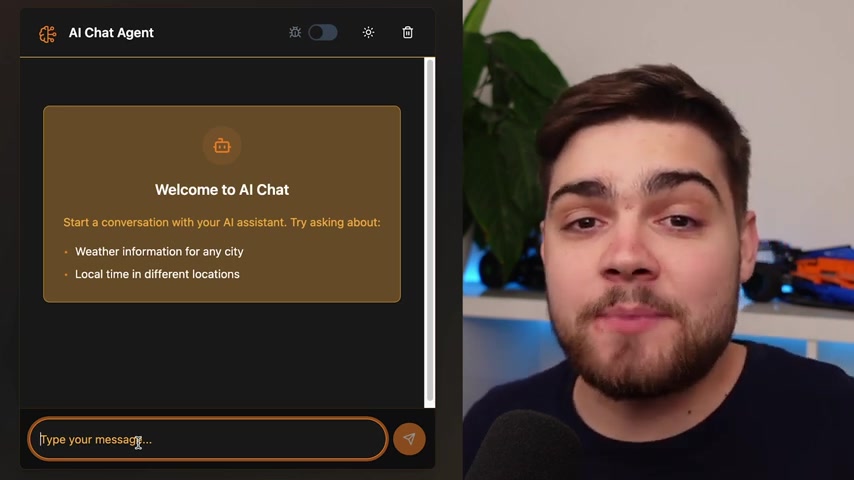
This means that AI agents built with this SDK can maintain their state across Sessions, handle long-running processes, and Scale horizontally to meet demand without requiring complex infrastructure management.
At its core, the SDK abstracts away many of the complexities involved in building AI agents, such as managing state, handling concurrency, and ensuring scalability. By providing a set of high-level APIs and tools, the SDK allows developers to focus on the core logic of their AI agents, rather than getting bogged down in infrastructure concerns. This dramatically reduces the time and effort required to build and deploy AI-powered applications.
Key benefits include:
- Simplified Development: High-level APIs and tools reduce the complexity of AI agent creation.
- Durable Objects: Built-in state persistence, Task Management, and horizontal scaling.
- Extensibility: Supports various AI models and integrations through the OpenAI API schema.
- Customization: Option to self-host agents on your own infrastructure for increased control.
The Power of Durable Objects with Superpowers
Durable Objects are the foundation of Cloudflare's AI Agents SDK, and they bring a new level of resilience and scalability to AI agent development. Traditional serverless functions are stateless, meaning they don't retain any information between invocations. This makes it challenging to build AI agents that need to maintain context or track state over time. Durable Objects solve this problem by providing stateful serverless functions with built-in persistence.
With Durable Objects, AI agents can:
- Persist State: Store data across sessions, ensuring agents remember past interactions and maintain context.
- Handle Long-Running Tasks: Execute tasks that take minutes, hours, or even days to complete without timing out.
- Scale Horizontally: Automatically scale to handle increased traffic and demand without requiring manual intervention.
- Benefit from Cloudflare's Global Network: Deploy agents across Cloudflare's global network for low-latency access and high availability.
These "superpowers" enable developers to build AI agents that are more reliable, scalable, and capable of handling complex tasks. They also open up new possibilities for AI-powered applications, such as personalized recommendations, real-time collaboration, and automated workflows.
Diving Deeper: Key Features of the AI Agents SDK
Persistent State: The Foundation of Intelligent Agents
Persisting state is critical for building AI agents that can learn, adapt, and provide personalized experiences. With the AI Agents SDK, persisting state becomes remarkably simple. Each agent instance utilizes a SQLite database to store stateful information
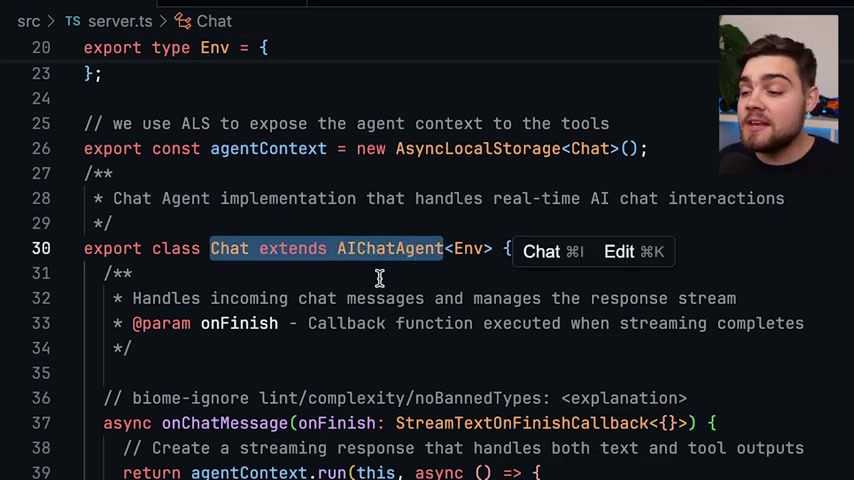
. This allows agents to retain knowledge across different interactions and sessions, enabling them to make informed decisions and deliver tailored responses.
Imagine an e-commerce chatbot that remembers your past purchases and preferences. By persisting state, the chatbot can offer personalized product recommendations, provide proactive support, and streamline the checkout process. This leads to a more engaging and efficient shopping experience.
Benefits of persistent state include:
- Personalized Experiences: Agents can tailor responses and actions based on past interactions.
- Contextual Awareness: Agents retain knowledge of previous conversations, enabling more natural and engaging interactions.
- Improved Decision-Making: Agents can leverage historical data to make better decisions and predictions.
- Seamless User Experience: Agents maintain continuity across sessions, providing a consistent and personalized experience.
Scheduled Tasks: Automating Actions and Processes
The ability to schedule tasks is another powerful feature of the AI Agents SDK. It allows developers to automate actions and processes that need to be executed at specific times or intervals. Scheduled tasks are persistent, meaning they will continue to run even if the agent is inactive.

This opens up new possibilities for AI-powered automation, such as:
- Sending Reminders: Agents can schedule reminders for appointments, deadlines, or recurring tasks.
- Running Background Processes: Agents can automate tasks such as data analysis, report generation, or system maintenance.
- Triggering Events: Agents can trigger events based on predefined schedules or conditions.
The SDK offers flexibility in Scheduling tasks, supporting:
- Specific Date and Time: Tasks can be scheduled to run at a precise date and time.
- Delayed Execution: Tasks can be scheduled to run after a specified delay (e.g., in 10 seconds).
- Cron Expressions: Tasks can be scheduled to run at recurring intervals using cron expressions.
With scheduled tasks, developers can build AI agents that are not only intelligent but also proactive and efficient.
Seamless Synchronization with Agent Context
The Agent Context feature facilitates real-time data sharing and synchronization between different instances of an AI agent. This is particularly useful in scenarios where multiple users or devices need to interact with the same agent simultaneously.
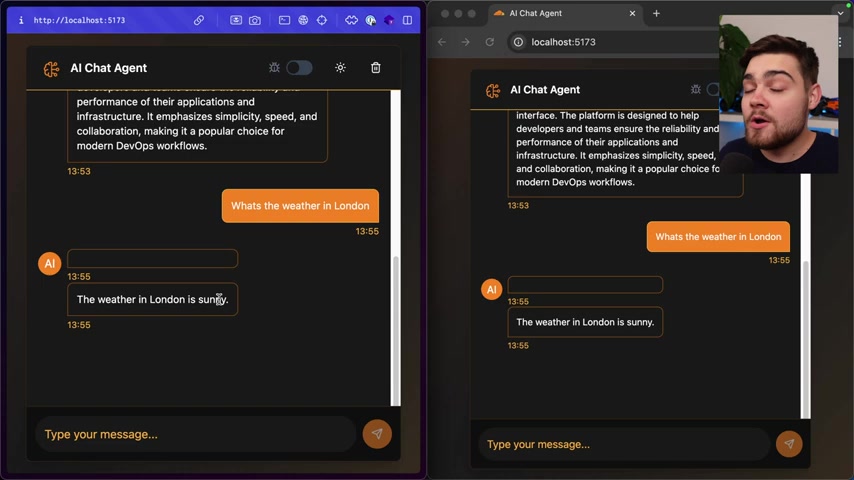
With Agent Context, developers can:
- Enable Real-Time Collaboration: Allow multiple users to interact with the same agent and see updates in real time.
- Sync Data Across Devices: Ensure that data is consistent across different devices or browsers.
- Build Multi-Window Applications: Create applications with multiple windows that share the same agent state.
The Agent Context feature leverages web sockets to provide low-latency, bidirectional communication between agent instances. This ensures that data is synchronized in real time, providing a seamless and consistent user experience.
For example, imagine a collaborative design tool powered by an AI agent. Multiple designers can work on the same design simultaneously, and the agent context ensures that everyone sees the latest changes in real-time. This facilitates collaboration and streamlines the design process.
Unlocking AI Power with Large Language Models (LLMs)
The AI Agents SDK integrates seamlessly with Large Language Models (LLMs), enabling developers to build AI agents that can understand and respond to natural language input. LLMs are powerful AI models that have been trained on vast amounts of text data, allowing them to perform tasks such as:
- Natural Language Understanding (NLU): Understanding the meaning and intent behind natural language input.
- Natural Language Generation (NLG): Generating human-quality text in response to prompts or queries.
- Text Summarization: Summarizing long documents or articles into concise summaries.
- Translation: Translating text from one language to another.
By integrating with LLMs, the AI Agents SDK allows developers to build AI agents that can:
- Understand User Intent: Accurately interpret user requests expressed in natural language.
- Generate Conversational Responses: Create natural and engaging dialogue with users.
- Perform Complex Tasks: Leverage LLMs to perform tasks such as answering questions, providing recommendations, and generating content.
The SDK supports various LLMs that adhere to the OpenAI API schema, including Cloudflare Workers AI, giving developers the flexibility to choose the model that best suits their needs.
Model Routing with Cloudflare Workers AI
To further optimize the usage of AI models, the SDK supports model routing through Cloudflare Workers AI

. This allows developers to route requests to different AI models based on various factors, such as:
- Model Reachability: Route requests to models that are currently available and responsive.
- Client Rate Limits: Distribute requests across multiple models to avoid exceeding rate limits.
- Cost Budget: Route requests to models that fit within a predefined cost budget.
Model routing helps developers to:
- Maximize Model Availability: Ensure that requests are always processed by a reachable model.
- Optimize Cost: Reduce costs by routing requests to the most cost-effective model.
- Improve Performance: Enhance performance by distributing requests across multiple models.
For instance, you can configure the system to automatically switch to a backup model if the primary model becomes unavailable or exceeds its rate limit. This ensures that your AI agents remain functional even in the face of unexpected events.






Most people like
































Report
Please select a reason for reporting
- 13 Reasons to Switch from Snapchat to Text Messaging
- 7 Powerful Speech to Text Apps to Boost Productivity
- 10 Best Speech to Text Tools for Effortless Transcription
- 13 Free Tools to Easily Transcribe Audio to Text
- 15 Surprising Ways Google's Speech-to-Text Boosts Productivity
- 7 Best Free Online Audio to Text Transcription Tools
- 9 Tips to Transcribe Speech to Text Faster and Better
- 13 Best Speech to Text Software for Windows 10 in 2023
- 7 Tips for Choosing the Best Transcriber for Audio to Text
- 11 Reasons Why Dragon Speech-to-Text Apps are Game-Changers
- 6 Secrets to Enhance Your Speech to Text Transcription
- 6 Brilliant Ways to Boost Productivity with Talk-to-Text on Your MacBook
- 6 Ways Transcription Software Converts Audio to Text
- 8 Tips to Transcribe Speech to Text Like a Pro
- 6 Reasons IBM Watson Speech to Text is a Game-Changer
- 14 Powerful Ways Talk-to-Text Improves Your Workflow
- 12 Top Windows Speech-to-Text Software for Efficient Transcription
- 12 Game-Changing Benefits of Apple's Speech to Text Technology
- 9 Powerful Use Cases for AWS Speech to Text Technology
- 10 Easy Steps to Transcribe YouTube Videos to Text
- transcription audio en texte
- online audio transcription
- free audio file transcription
- free ai audio transcription
- audio transcription service
- audio transcription online free
- audio transcription free online
- audio to transcription software
- audio and transcript
- ai audio transcription free
- voice recording to text converter
- translate voice recording to text
- record voice to text
- audio recording to text converter
- voice recording and transcription
- chatgpt voice to text
- gmail voice to text
- speech to text reader
- speech to text ai free
- speech to talk
- Create Engaging Animated Explainer Videos with a Free AI Tool
- Stop Multi-Subscribing: Benchmark Top AI Visual Models in One Canvas
- Best Seedance 2.5 API Provider: Every Price on the Market, Checked at Source
- AI OnlyFans: How to Generate $30,000/Month (Legally)
- Transform Your Script into an Engaging Video with AI Video Maker!
- AI Marketing Automation: A Comprehensive Guide for Small Businesses
- Midjourney Alternative for Anime Art Creators: Why PixAI May Be Better for Character Workflows
- 10 Things Most People Get Wrong About AI Image Search
- AI Girlfriend Apps: Top Choices Redefining Relationships 2025
- How to Reduce Quoting Errors in Salesforce with AI-Assisted Quote Creation
- AI Resume Builders: EnhanceCV, ResumeNerd AI, & Teal Compared
- ResumeAI: Crafting ATS-Optimized Resumes with AI
- AI in Resume Writing: A New Era for Job Seekers
- AI Resume Tools: Streamline Your Job Search and Land Your Dream Role
- AI Resume Optimization: The Right Way to Land Interviews
- Crafting a Killer Resume with AI: A Step-by-Step Guide
- Crafting a Winning Resume: AI Tools and Expert Tips
- AI Job Search: Level Up Your Career with AI Automation
- Empower Your Career Journey: Dynamic Resumes with AI
- AI Resume Builder: Create Professional Resumes Effortlessly

Copyright ©2026 toolify